Electric Scooters: How One Brand Used Meta Ads and Google Ads to Ride a Trend All the Way to the Bank
Who We’re Studying
A U.S.-based e-scooter brand, selling high-ticket products direct-to-consumer. Early on, paid ads were working. Then they hit a wall. ROAS was fine, nothing was breaking, but revenue growth had flatlined. They didn’t need more spend. They needed a partner who could actually unlock the next level.
Objectives
The brand had one clear ask: relaunch and optimize their paid ad game across Meta and Google. The goal? More revenue, better efficiency, and a ROAS that actually made sense. They’d run campaigns before, sure, but profitability never really showed up. What they needed was a real performance strategy, something structured enough to actually scale.
Challenge
Here’s where it got messy. The old campaigns were underperforming, and it wasn’t hard to see why. Account structure was scattered, creative wasn’t built for performance, and tracking setups were incomplete. Both Google and Meta ads were pulling weak ROAS. Worse, key signals like purchase events and pixel data were missing or unreliable, which meant limited room to optimize and even less to learn from.
The Growth Method
Creative & Landing Page Overhaul
New landing pages went up, built with direct client input to actually move conversion rates. Refurbished model campaigns launched alongside pushes for new arrivals. Video ads entered the mix, and YouTube thumbnail-style creative got tested to hook prospects earlier in the funnel.
Audience Segmentation & Targeting
Audiences got split up properly, by location, language, and demographics. That meant local LA campaigns, Spanish-speaking audience targeting, and a dedicated student segment. Exclusions were layered in too, keeping spend focused on new, high-intent customers instead of wasting budget on repeat impressions.
Product & Campaign Optimization
The Google Ads product feed got cleaned up for relevance. Meta’s creative strategy got refined using a proprietary creative analysis system built to multiply what was already working. Tracking issues got fixed, and TripleWhale came in to sharpen analytics and give real visibility into campaign performance.
Testing & Experimentation
Test campaigns ran side by side with the stable ones, no disruption to what already worked. Creatives kept evolving based on data pulled from TripleWhale and Adveronix automation.
Early Wins
The new tests started pulling ahead fast. Video ads, YouTube campaigns, and the newly segmented audiences all outperformed the older setups. ROAS climbed noticeably on both platforms, proof that better creative variety and sharper targeting actually move the needle. And with cleaner tracking in place, both Google and Meta’s algorithms had the micro-conversion data they needed to optimize even smarter.
What Blocked Growth
Scaling brought its own problems. Meta’s learning phase kept getting interrupted, mostly from budget shifts happening too often. Google’s Performance Max campaigns were inconsistent too, some asset groups pulling their weight, others just not showing up. And on both platforms, creative fatigue started creeping in, especially in prospecting, where the same faces kept showing up to the same audiences one too many times.
How We Fixed It
The fixes started with discipline. Stricter budget rules went in to protect campaign learning phases from getting disrupted mid-cycle. Creative sprints kept top-performing formats fresh instead of letting them fade out. On Google, asset groups got broken out by theme, and negative keyword sculpting cleaned up the irrelevant queries eating into spend. Cross-platform tracking got tightened too, with server-side integrations and GA4 event auditing closing the gaps that were costing clean data.
Scaling Strategy
- Vertical and horizontal scaling – Budget went up on the campaigns already winning, while new test campaigns launched in parallel to find the next ones.
- Audience expansion – New segments got targeted, carefully, so they added reach without eating into the audiences already converting.
- Creative iteration – Ad variations kept getting tested, nonstop, until the winning combinations showed themselves.
- Budget optimization – Spend concentrated on what was actually performing, while low-efficiency audiences got cut loose.
Performance Snapshot
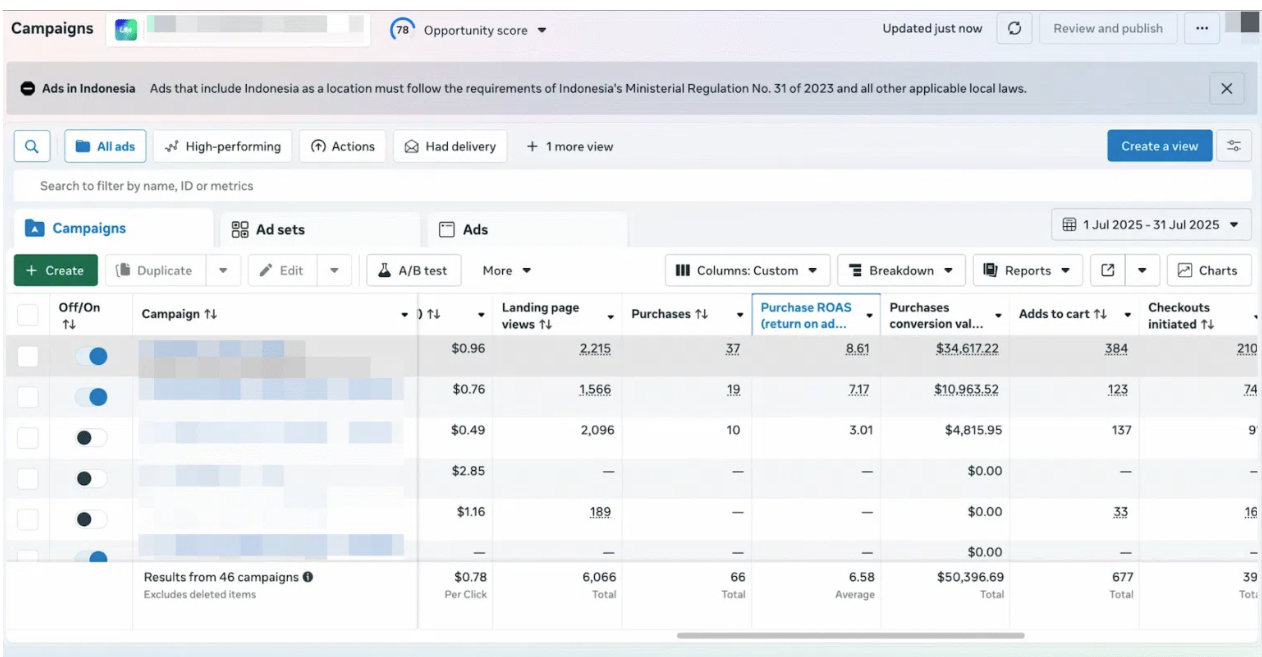
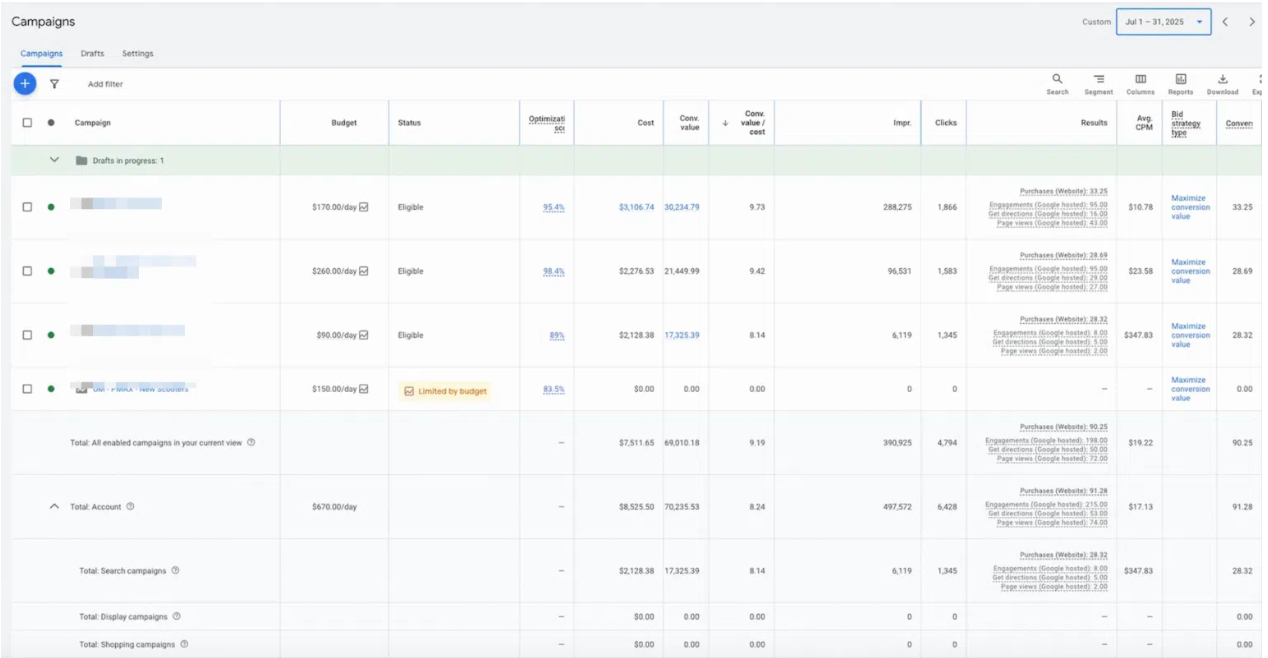
The results speak for themselves. A stable 3.3x blended ROAS across Meta and Google. Average daily revenue up 40% compared to previous months. CAC dropped 28%, and shopping ad CTRs jumped 47%. And even with more traffic and higher spend flowing in, the store held a healthy conversion rate the whole way through.
- Meta Ads ROAS: 6.58
- Google Ads ROAS: 9.19
This ecommerce case study proves that with the proper structure, Shopify brands can scale profitably through Google Ads and Meta Ads.
Meta Ads Performance
Google Ads Performance
That’s what happens when paid ads actually get treated like a system, not a guessing game. Clean account structure, sharp creative, real audience segmentation, and tracking that actually works. No shortcuts, just execution done right, and a 3.3x ROAS to show for it.
This is exactly the kind of performance strategy RUHCopy builds for Meta and Google Ads. Scattered campaigns, unreliable tracking, creative fatigue, these are fixable problems, not permanent ones. If your ads are stuck the way this brand’s were before the fix, the same structured approach can work for you too.
Want to see what a real growth strategy looks like for your ad accounts? That’s exactly what RUHCopy does.